I find myself blessing Herbert Marcuse. After five weeks of Hegel, Marx, Heidegger, and Lukacs, we're finally reading a book whose Germanic style doesn't require minutes per page and whose words mean, for the most part, what they mean in other books. I'm flying through this stuff.
Beowulf is never going to cruise along, but the translation is getting less tedious by the week as I internalize more vocabulary. Besides that, reading about flesh-eating man-monsters makes just about any translation worth the time.
I've decided that when I find some time cleared out, I'm going to write a Saul book. Samson has his famous Miltonic tragedy, and Jesus has Milton and Kazantzakis, and Moses has movies, and David has sculptures. What of Saul? (No, not the one who later goes by Paul.) Certainly he's as much a tragic thug as Samson, and certainly his stories would translate to the big screen as well as Moses's. This might not happen in any real way before I finish grad school, and it might never see the fluorescent light of a bookstore, but I'm still going to write a Saul book. I don't know whether it'll be a play or a novel or a poem (I've never written a play or a novel, and all my poetry has been brief and lyric), and it might not be any good, but one of these days, I'm going to write me a Saul book.
(BTW, if any of my readers know of any Saul book that's already been done, let me know in the comments section.)
Classes went well this week. As with last spring's classes, this group hit its stride with the David narratives. 1 and 2 Samuel are the perfect places, IMO, to bring agnostics and Jews and Christians together for good conversations. The stories resist theological reduction, so the Christians have to stay on their toes, yet YHWH comes in not as a boring philosophical concept but as a fiery and unpredictable and genuinely good character, so the agnostics don't have much impetus to back away. This week we spent one lesson on the rise of David's fame in Israel, one on the witch of Endor scene, and one on David's coronation and royal career. Monday we'll take on David and Bathsheba, the second-most-familiar David story and also the one whose conclusion, which features what either comes across as David's unflappable piety or inexcusable callousness. Then we'll get to Absalom, where the real fun happens.
I love teaching David.
Grading paper 2 has come along smoothly. For the most part the papers have been good, competent college papers, and I'm looking forward to teaching fine-tuning rather than basic organizational skills.
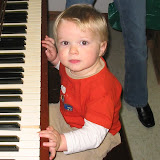
The cantata approaches, and semester papers loom, and Micah turns two in less than two weeks. Hwaet!
24 February 2007


19 February 2007

17 February 2007
My current draft of my teaching philosophy
At UGA this semester I'm in the process of putting together a university-approved teaching portfolio, and one element of that portfolio is a teaching philosophy. Here's my current workup of that philosophy, and I hope my faithful readers can give me some feedback.
Teaching Philosophy
An unstated conception of teaching and learning is one beyond critique; thus for the sake of humility, I begin by agreeing with Wittgenstein when he writes, “The limits of my language mean the limits of my world” (Tractatus Logico-Philosphicus 5.6). Before one goes about changing one’s world, one ought to understand the shape and character of that world, and every subject’s interaction with objects happens through and with and in response to words and ideas and debates and traditions. Whatever else happens when a college professor teaches college students, the class’s vocabulary should grow, not only in words but also in concepts and categories. As an apprentice chemist learns the notations and categories that make up the chemist’s discourse through study and experiment, so a student of literature learns both the terminology with which the scholarly community converses and studies with a more experienced practitioner texts and other artifacts that the teacher decides might be worth studying. Both practices expand and refine vocabularies, hopefully to the end of shaping human beings as self-conscious and world-conscious intellectuals.
As vocabularies expand, practical disciplines anchor intellectual pursuits in embodied communities, a key for the humble appreciation of the discipline. My classroom is not a time and a space simply for lecturing and note-taking but also for moral formation, the kind of thing that happens when a coach teaches a player how to excel within the rules of basketball or when a practicing scientist mentors a laboratory assistant in the ways that the scientific community lives a scientific life. With English in particular moral learning must necessarily involve honesty at the level of research and composition but also extends to the ways in which a community asks difficult questions together, the practice of kindness as well as suspicion in reading texts, and diligence in adjusting one’s self and one’s vocabularies to the inquiry at hand. When I evaluate and grade a paper, my purpose is not primarily to communicate to graduate schools a student’s talent abstracted from the aims of the class but to let the student know where the next step towards competence lies. When we read texts together my aim is not merely to “problematize” conventional wisdom but to model and to develop those aptitudes that allow one to live well alongside and within complex situations (including those most complex of entities, human communities). Every incoming college class is in some sense a chosen class, those young people with the drive and ability to effect change for good. My classes always attempt to make small steps towards developing that class.
When a student leaves my classroom, I have contributed three months’ instruction to a life that spans at least seventeen years and often longer. Thus humility ought to inform my goals for students. In one semester a student in my English class ought to have a stronger grasp of critical and conceptual vocabularies relevant to the texts at hand. She should have practiced, at least for the span of one major project, those virtues proper to a truthful and diligent researcher and synthesizer of the scholarship available. Depending on the sort of class, he also should have at least a working familiarity with the spectrum of approaches that might lead to a good life in a world made more complex and some apparatus for evaluating those approaches. If the student reaches those things, then the person leaving my class will have partaken in the humanities, those disciplines that bring consciousness and ethics and imagination together for the good of a larger community.
16 February 2007
Into David
A busy week it's been.
I presented on Georg Lukacs in our literary theory class and by all accounts did well.
I translated another 150 lines of Beowulf.
I read another book-and-a-half of Milton criticism.
I took Micah to a doctor's appointment and our Matrix for its 15K mile service.
And I started grading another batch of freshman papers.
And that's outside of teaching my class. The last two days we started tackling biblical narratives in some more detail, doing Ruth on Wednesday and David and Goliath today. On both days I relied too heavily on the students' agendas. I think for the next week I'm going to set (for the most part) each discussion's subject matter and try to be open to the students' taking the class away from me. I really ought to spend more time helping them close-read and showing them where paper topics naturally arise out of each narrative, but the last couple days I've been improvising with poor results. I'm not sure it's apathy so much as shell-shock; they seem to be looking for the "right" things to talk about, whereas I just want to talk intellectually about something.
Monday I've got the post-Goliath, pre-Philistine-mercenary stories, so there ought to be plenty of material there. Besides that I've got to work in some writing instruction. There's just not enough time in a semester...
I presented on Georg Lukacs in our literary theory class and by all accounts did well.
I translated another 150 lines of Beowulf.
I read another book-and-a-half of Milton criticism.
I took Micah to a doctor's appointment and our Matrix for its 15K mile service.
And I started grading another batch of freshman papers.
And that's outside of teaching my class. The last two days we started tackling biblical narratives in some more detail, doing Ruth on Wednesday and David and Goliath today. On both days I relied too heavily on the students' agendas. I think for the next week I'm going to set (for the most part) each discussion's subject matter and try to be open to the students' taking the class away from me. I really ought to spend more time helping them close-read and showing them where paper topics naturally arise out of each narrative, but the last couple days I've been improvising with poor results. I'm not sure it's apathy so much as shell-shock; they seem to be looking for the "right" things to talk about, whereas I just want to talk intellectually about something.
Monday I've got the post-Goliath, pre-Philistine-mercenary stories, so there ought to be plenty of material there. Besides that I've got to work in some writing instruction. There's just not enough time in a semester...
08 February 2007
Sorry
I realize the chart below is hard to read, but it also gets mad and crashes my browser when I try to edit it, so I'm going to learn my lesson about grumpy html and leave it alone.
Last Ten Posters
I saw it on Slim's blog, and it looked cool, so here are the locations of my blog's last ten visitors:
|  | United States | Kalamazoo, Michigan | |
| | United States | Orange, California | |
| | United States | Amf Ohare, Illinois | |
| | United States | Conyers, Georgia | |
|  | Germany | Berlin | |
| | United States | Huntingdon Valley, Pennsylvania | |
| | United States | Kingsport, Tennessee | |
| | United States | Somerville, Massachusetts | |
| | United States | Huntingdon Valley, Pennsylvania | |
| | United States | Orange, California |
07 February 2007

06 February 2007
More Revisions
So here I am, between revision meetings, scrambling to say something to each paper as it comes to me. I've got six more groups to go (I think), and each one wears me down a bit more. As I say every semester, the value of these meetings, both as exemplary for the practice of group revision and as feedback into my students' writing, is valuable enough that I'm willing to kill myself once a semester to do it. But I can't even fathom how some of my colleagues read preliminary drafts of every paper.
We've moved on from Hegel to Marx in Cole's class, and the readability difference is massive. I'm cooking through The German Ideology where I crawled through Phenomenology of Spirit and even Philosophy of History. I know that once we get into twentieth-century literary theory the readability is likely to depart again, so I'm not going to get used to it.
The David unit is coming up, and I still haven't written any quizzes. Perhaps this afternoon.
We've moved on from Hegel to Marx in Cole's class, and the readability difference is massive. I'm cooking through The German Ideology where I crawled through Phenomenology of Spirit and even Philosophy of History. I know that once we get into twentieth-century literary theory the readability is likely to depart again, so I'm not going to get used to it.
The David unit is coming up, and I still haven't written any quizzes. Perhaps this afternoon.
02 February 2007
Revision Meetings, Day One
So far none of my students has fought me when I suggested rewriting.
Audrey Guenther, are you reading this? :)
Monday groups pick up a bit, and the whole shebang culminates on Wednesday, when I meet with four groups, then finishes out with two meetings on Friday.
I need to write some David quizzes before that unit starts up--that's when and where a goodly (badly, really) number of students will stop reading the daily assignments. It's a long semester; it happens.
Audrey Guenther, are you reading this? :)
Monday groups pick up a bit, and the whole shebang culminates on Wednesday, when I meet with four groups, then finishes out with two meetings on Friday.
I need to write some David quizzes before that unit starts up--that's when and where a goodly (badly, really) number of students will stop reading the daily assignments. It's a long semester; it happens.
01 February 2007
Not much time for bloggery lately
This semester really is turning out to be a grinder. But if I make it through this one, I'm done with major coursework operations. Mission Accomplished, one might say.
Well, one might.
The Psalms unit just plain went too fast. I'm glad that I spread out the revision days over more than a week (I tried doing them all in a week before and nearly killed myself), but three class periods just wasn't enough time really to talk about more than a couple poems a day. I hope that the paper-writing itself proves to be helpful to my students.
I'm about a third of the way through grading paper 1, and the quality of the prose on the whole is pretty good. They're muddling their conceptual agents and their grammatical subjects, and their conceptual actions and relationships often don't land where the grammatical main verb is, but that's why we teach writing, and I'm confident I can help them do that bit better.
We finished our discussions of Hegel texts last night and move on to Marx next week. Three hours make a long class. Three hours of literary theory make one tired. Three hours of Hegel at night makes one quite tired indeed.
And I've got Beowulf done for the week and have next week's text printed out and ready to translate. Hwaet!
Well, one might.
The Psalms unit just plain went too fast. I'm glad that I spread out the revision days over more than a week (I tried doing them all in a week before and nearly killed myself), but three class periods just wasn't enough time really to talk about more than a couple poems a day. I hope that the paper-writing itself proves to be helpful to my students.
I'm about a third of the way through grading paper 1, and the quality of the prose on the whole is pretty good. They're muddling their conceptual agents and their grammatical subjects, and their conceptual actions and relationships often don't land where the grammatical main verb is, but that's why we teach writing, and I'm confident I can help them do that bit better.
We finished our discussions of Hegel texts last night and move on to Marx next week. Three hours make a long class. Three hours of literary theory make one tired. Three hours of Hegel at night makes one quite tired indeed.
And I've got Beowulf done for the week and have next week's text printed out and ready to translate. Hwaet!
27 January 2007
Hwaet!
400 posts! Woo hoo!
Also, I've now translated 319 lines of Beowulf, or 10% of the thing! Hwaet!
Also, I've now translated 319 lines of Beowulf, or 10% of the thing! Hwaet!
26 January 2007
Psalms and Pedagogy
We're two days into the Psalms unit now, and classes are picking up fast. I don't know whether I've just packed the first two papers too closely towards the semester's beginning or whether my own classes are hindering my ability to expend energy on my teaching, but paper two's revision meetings start next Friday, and I still don't feel like I know my classes.
We've been close-reading thus far for parallelism (taught them some Lowth the first day) and sub-generic structure (lament, praise, didactic, etc.), then comparing them to 17th-century poems (Donne today). I'm hoping that writing this paper will give them enough poetry that they feel like they've been in a lit class, but frankly, I'm ready to get into David and Job. That's where the really good conversations and the really fun classes get rolling.
My three classes really are going to put me under if I get behind at all; I've been proactive and early-starting thus far; I've just got to make sure that I don't make it out of spring break without some pages written on my final papers. I'm almost certain at this point that I'm going to stop attending Latin in April to focus solely on term papers. I can pick up those Wheelock chapters and get ready to roll on LATN 2001 in the summer.
We've been close-reading thus far for parallelism (taught them some Lowth the first day) and sub-generic structure (lament, praise, didactic, etc.), then comparing them to 17th-century poems (Donne today). I'm hoping that writing this paper will give them enough poetry that they feel like they've been in a lit class, but frankly, I'm ready to get into David and Job. That's where the really good conversations and the really fun classes get rolling.
My three classes really are going to put me under if I get behind at all; I've been proactive and early-starting thus far; I've just got to make sure that I don't make it out of spring break without some pages written on my final papers. I'm almost certain at this point that I'm going to stop attending Latin in April to focus solely on term papers. I can pick up those Wheelock chapters and get ready to roll on LATN 2001 in the summer.
20 January 2007
I take it back
Okay, you know that last post in which I said my students were overly compliant?
Forget it.
On the class's online discussion board, the pro-Joseph brigade has made a charge. Let the games begin!
Forget it.
On the class's online discussion board, the pro-Joseph brigade has made a charge. Let the games begin!
Ambiguous Joseph
I spent a fair bit of time in my classes on Friday laying out my theories about agency and grammar and why excessive passive and expletive constructions hinder good academic writing, so we had too little time, as usual, to talk about Joseph.
This group of students, I think, tends too far towards malleability (or at least shows of malleability), and I'm going to have to watch it. When I focused our attention on Joseph's dark side, last year's classes fought me, clinging tenaciously to Joseph as a positive exemplar. I'm used to that; I can always get Socratic on them and make them think harder about it. This year's group almost immediately turned on Joseph, finding nothing but fault in him. I'm not sure whether they're doing this out of a genuinely shaky grasp on the story or to say what they think I want to hear, but either way, I had to give a talk to each class about Joseph's complexity and ambiguity so that they wouldn't leave this (very brief) unit thinking him an utter scumbag.
I collect the first brief paper Wednesday and get started on our Psalms and 17th-century poetry unit. I've got the skeleton of a lecture about English and Hebrew poetic conventions ready, but I need to spend some more time on it between now and Wednesday.
This group of students, I think, tends too far towards malleability (or at least shows of malleability), and I'm going to have to watch it. When I focused our attention on Joseph's dark side, last year's classes fought me, clinging tenaciously to Joseph as a positive exemplar. I'm used to that; I can always get Socratic on them and make them think harder about it. This year's group almost immediately turned on Joseph, finding nothing but fault in him. I'm not sure whether they're doing this out of a genuinely shaky grasp on the story or to say what they think I want to hear, but either way, I had to give a talk to each class about Joseph's complexity and ambiguity so that they wouldn't leave this (very brief) unit thinking him an utter scumbag.
I collect the first brief paper Wednesday and get started on our Psalms and 17th-century poetry unit. I've got the skeleton of a lecture about English and Hebrew poetic conventions ready, but I need to spend some more time on it between now and Wednesday.
18 January 2007
Fifteen bucks
I found a small, 128MB mp3 player at Toys R Us for fifteen bucks. Since I only use such devices when I run, and since an hour and twenty minutes' music covers more time than my out-of-shape legs can, it's a great purchase.
In Hebrew Bible teaching news, the first day of Joseph went entirely too quicly, so quickly that I ran out of time in both sections before I could get to writing instruction. I'll have to start next class with writing and then launch into discussions of the narrative and the Robert Alter chapter I'm having them read.
I'm looking forward already to teaching the Psalms again, and I think that the revision groups for that paper will once again prove most helpful.
In Hebrew Bible teaching news, the first day of Joseph went entirely too quicly, so quickly that I ran out of time in both sections before I could get to writing instruction. I'll have to start next class with writing and then launch into discussions of the narrative and the Robert Alter chapter I'm having them read.
I'm looking forward already to teaching the Psalms again, and I think that the revision groups for that paper will once again prove most helpful.
13 January 2007
How 'bout them Colts
Well, two playoff games and zero touchdowns given up...
And half a dozen (I think) Manning interceptions with one touchdown thrown.
I suppose the playoff season is a strange place to live.
Lord help our Colts!
And half a dozen (I think) Manning interceptions with one touchdown thrown.
I suppose the playoff season is a strange place to live.
Lord help our Colts!
12 January 2007

Let 'er Rip
Drop/Add period ended at midnight last night, and the semester proper is under way.
We did get-to-know-each-other stuff today, mainly so we could get into the texts with a little less tension in the air. Monday we begin Joseph, and I've already forgotten my Harper-Collins Study Bible in my office for the first time this semester. For this text that's no big deal; I can plan my lesson with just the text in front of me, and the narrative is long enough that we'll only be able to discuss a couple episodes in depth anyway.
In the final hours of drop/add, my class numbers dropped to 20 for 8:00 and remained at 22 for 9:00. I imagine I'll lose some to brown-bottle flu (those early Friday mornings will do that), but at least I begin with fewer than the maximum 44-paper sets to grade. Once again I've got a preponderance of sophomores in my classes; I never got that many for "regular" ENGL 1102, but both times I've tried special sections, the sophomores (and juniors) have showed up. I just hope that they can remember that the class is for freshmen and not infect my younger students with boredom (as my juniors last spring did).
Beowulf is going to be interesting; in our first week, we translated ten of the fifty-two assigned lines of poetry as a class. Next week we have another sixty to take on; I wonder whether we'll dip into the first week or start where the syllabus starts on Wednesday or just do the good episodes. Dr. Evans also assigned critical articles that we're to present to the class, and I drew the one on medieval poetry and patristics, so that part should be fun.
Now I must settle in to the task of reading two hundred pages of Hegel's Phenomenology of Spirit for Wednesday night. The first chunk (that is to say, seven pages) hasn't been nearly as painful as I remember Hegel being when I was a senior in college. I suppose I've grown in my reading ability since then.
We did get-to-know-each-other stuff today, mainly so we could get into the texts with a little less tension in the air. Monday we begin Joseph, and I've already forgotten my Harper-Collins Study Bible in my office for the first time this semester. For this text that's no big deal; I can plan my lesson with just the text in front of me, and the narrative is long enough that we'll only be able to discuss a couple episodes in depth anyway.
In the final hours of drop/add, my class numbers dropped to 20 for 8:00 and remained at 22 for 9:00. I imagine I'll lose some to brown-bottle flu (those early Friday mornings will do that), but at least I begin with fewer than the maximum 44-paper sets to grade. Once again I've got a preponderance of sophomores in my classes; I never got that many for "regular" ENGL 1102, but both times I've tried special sections, the sophomores (and juniors) have showed up. I just hope that they can remember that the class is for freshmen and not infect my younger students with boredom (as my juniors last spring did).
Beowulf is going to be interesting; in our first week, we translated ten of the fifty-two assigned lines of poetry as a class. Next week we have another sixty to take on; I wonder whether we'll dip into the first week or start where the syllabus starts on Wednesday or just do the good episodes. Dr. Evans also assigned critical articles that we're to present to the class, and I drew the one on medieval poetry and patristics, so that part should be fun.
Now I must settle in to the task of reading two hundred pages of Hegel's Phenomenology of Spirit for Wednesday night. The first chunk (that is to say, seven pages) hasn't been nearly as painful as I remember Hegel being when I was a senior in college. I suppose I've grown in my reading ability since then.
11 January 2007
Back to the Grind
All of my spring classes have now met, and the semester's going to be a rough one. I'm already feeling tired thinking of all the hours I'm going to spend reading Hegel and translating Beowulf. But when I make it through, I'll nearly be a Jedi.
My Hebrew Bible and/as Literature classes have met twice, and at midnight tonight the rosters get finalized so that I can start the genuine class on Friday. We spent yesterday's class period close-reading Genesis 12 and giving the students a taste of what is to come over the course of the semester.
I'm going to try to make the focus of this semester's instruction the concept of intellectual traditions, those practices within which people have lived and live that make sense of things like texts and life and God. We discussed them briefly in the first class and really dug into what sort of tradition that Genesis 12 (the beginning of the Abram/Abraham narratives) constitutes as opposed to the opening chapters of the gospel of Mark or the opening lectures in a political science-type course.
I really hit a stride and connected with the students while teaching Plato last semester; I hope that I can do likewise this spring.
My Hebrew Bible and/as Literature classes have met twice, and at midnight tonight the rosters get finalized so that I can start the genuine class on Friday. We spent yesterday's class period close-reading Genesis 12 and giving the students a taste of what is to come over the course of the semester.
I'm going to try to make the focus of this semester's instruction the concept of intellectual traditions, those practices within which people have lived and live that make sense of things like texts and life and God. We discussed them briefly in the first class and really dug into what sort of tradition that Genesis 12 (the beginning of the Abram/Abraham narratives) constitutes as opposed to the opening chapters of the gospel of Mark or the opening lectures in a political science-type course.
I really hit a stride and connected with the students while teaching Plato last semester; I hope that I can do likewise this spring.
09 January 2007
Post-Christmas Revisited
First, I'd like to thank the folks who commented on my first, haphazard post-Christmas post for reading and thinking with me. The following (still haphazard) reflections will attempt to respond to some of those comments.
When I talk about a group's appropriating a common symbol and making it a shibboleth for one faction, I don't necessarily need to assert an all-encompassing conspiracy or even to attribute agency to any one strategist. For instance, when the Qumran community (the Dead Sea Scrolls folks) appropriated the biblical prophets and made them weapons in polemics against the Jerusalem hierarchy, I don't necessarily think that the council got together in some sort of "strategy meeting" to vote on using the prophets, and I don't think that the intellectual architects of the War Scroll or the Temple Scroll had some cynical plan in mind to win political points. In that case I think that the folks who claimed the prophets genuinely believed the prophets to be on their side, and the Sadduccee rejection of the prophets as Scripture must have had at least something to do with an analogous rejection of Pharisaical and Qumranish politics.
In the case of the so-called "War on Christmas," I imagine that, were one to trace its origins, one would find not a Washington think-tank but nostalgic old-timers who remember when "Merry Christmas," a bit of benign cultural carry-over from the old English ways (where John Lennon and Harry Potter alike can muse about Christmas) that seemed to be fading into the past as retailers (who, after all, are all about making money) began to forge a more specifically American neutrality. (Christmas has been around for hundreds of years in England, whereas in America nothing has been around for hundreds of years.)
I do think that when mass-media personalities grab hold of those old-timers' nostalgia and turn it into something akin to the "Freedom Fries" embarrassment, one can assert more strongly that something cynical is going but still need not posit a global conspiracy.
On the other hand, I think that most calls of "Merry Christmas" are in fact friendly or at worst benign. I don't think that the "enemies" in the so-called "War on Christmas" are Muslims and Hindus so much as Democrats. (I'm fairly certain that the same was the case with "Freedom Fries.") The political logic there is, I think, cynical and cyclical: One dares those who don't celebrate Christmas to take offense by means of more and more public assertions about "Judeo-Christian traditions" and such, taking the traditions away from an inherited Britishness and recasting them as vestiges of a former, more pristine "Christian America" that may or may not have at some point existed. The polarizing effect of such appropriation forces elected officials, who in fact have to live with both camps of culture warriors, to take safeguards against litigation (more often at the hands of Democrats than Hindus). Then one points to the safeguards, says something about "political correctness" (which nobody, in my experience, can define well), and increases the air of paranoia, playing to the fears of those who remember fondly the "old days" before the instigation began. In the meantime, those of us who don't have a horse in the culture wars race are forced to live in a world in which "Merry Christmas" is no longer something from a Dickens story, friendly enough and contentless enough not to threaten, but now the code word of a certain faction, something akin to a self-apellation as "pro-family" (who isn't?) or "values voter."
So to cut off this rambling (and still haphazard) reflection, I'd say that ninety-nine out of a hundred wishes of "Merry Christmas" have nothing to do with rendering Hindus "other," and ninety-nine out of a hundred wishes of "Happy Holidays" are not trying to obliterate American Christianity. The sadness that inspired the first post has less to do with most folks and more to do with the poisonous appropriation and negation that some folks are willing to undertake for the sake of controlling Congress.
When I talk about a group's appropriating a common symbol and making it a shibboleth for one faction, I don't necessarily need to assert an all-encompassing conspiracy or even to attribute agency to any one strategist. For instance, when the Qumran community (the Dead Sea Scrolls folks) appropriated the biblical prophets and made them weapons in polemics against the Jerusalem hierarchy, I don't necessarily think that the council got together in some sort of "strategy meeting" to vote on using the prophets, and I don't think that the intellectual architects of the War Scroll or the Temple Scroll had some cynical plan in mind to win political points. In that case I think that the folks who claimed the prophets genuinely believed the prophets to be on their side, and the Sadduccee rejection of the prophets as Scripture must have had at least something to do with an analogous rejection of Pharisaical and Qumranish politics.
In the case of the so-called "War on Christmas," I imagine that, were one to trace its origins, one would find not a Washington think-tank but nostalgic old-timers who remember when "Merry Christmas," a bit of benign cultural carry-over from the old English ways (where John Lennon and Harry Potter alike can muse about Christmas) that seemed to be fading into the past as retailers (who, after all, are all about making money) began to forge a more specifically American neutrality. (Christmas has been around for hundreds of years in England, whereas in America nothing has been around for hundreds of years.)
I do think that when mass-media personalities grab hold of those old-timers' nostalgia and turn it into something akin to the "Freedom Fries" embarrassment, one can assert more strongly that something cynical is going but still need not posit a global conspiracy.
On the other hand, I think that most calls of "Merry Christmas" are in fact friendly or at worst benign. I don't think that the "enemies" in the so-called "War on Christmas" are Muslims and Hindus so much as Democrats. (I'm fairly certain that the same was the case with "Freedom Fries.") The political logic there is, I think, cynical and cyclical: One dares those who don't celebrate Christmas to take offense by means of more and more public assertions about "Judeo-Christian traditions" and such, taking the traditions away from an inherited Britishness and recasting them as vestiges of a former, more pristine "Christian America" that may or may not have at some point existed. The polarizing effect of such appropriation forces elected officials, who in fact have to live with both camps of culture warriors, to take safeguards against litigation (more often at the hands of Democrats than Hindus). Then one points to the safeguards, says something about "political correctness" (which nobody, in my experience, can define well), and increases the air of paranoia, playing to the fears of those who remember fondly the "old days" before the instigation began. In the meantime, those of us who don't have a horse in the culture wars race are forced to live in a world in which "Merry Christmas" is no longer something from a Dickens story, friendly enough and contentless enough not to threaten, but now the code word of a certain faction, something akin to a self-apellation as "pro-family" (who isn't?) or "values voter."
So to cut off this rambling (and still haphazard) reflection, I'd say that ninety-nine out of a hundred wishes of "Merry Christmas" have nothing to do with rendering Hindus "other," and ninety-nine out of a hundred wishes of "Happy Holidays" are not trying to obliterate American Christianity. The sadness that inspired the first post has less to do with most folks and more to do with the poisonous appropriation and negation that some folks are willing to undertake for the sake of controlling Congress.
08 January 2007


04 January 2007
A Haphazard Post-Christmas Thought
If ever anyone actually fought a War on Christmas, I think they won this year. For the first time in my 29 years, I started feeling uneasy when people wished me a Merry Christmas. The greeting, friendly or at worst benign throughout my years, started in 2006 to sound like a Republican code word.
I never called myself "pro-life" for very long, and I thought that "family values" sounded a bit squirrelly even back in high school. But in the moment when I realized that "Christmas" had been tainted, claimed as property by a political party, I got mad. And when I get mad, it tends to last only a couple minutes, and then I start to think.
The booger about Christmas is that every stage of its development is contested territory. Its origins might or might not have something to do with Saturnalia, and the historical tradition that links it with Saturnalia might or might not have its own agenda. The consumer orgy might or might not be a deviation from a pristine ur-Christmas with all the Advent fasts and proper piety, and the urge to return to that pristine Christmas might or might not be a quasi-liturgical neo-Puritan impulse. Of course, I tend to see complexity where others don't. (Hate the phrase "over-think.")
The lazy but literate part of my self wants simply to fall back on Dickens and Irving, to claim some easy "middle ground" in which Christmas is at once sacred and secular and in which the archaeology of genetic moments is an unnecessary trifle and for which the proper response is not thought but revelry in whatever happens to be there. (BTW, "A Christmas Carol" is the obvious Dickens reference; Irving's Sketch-Book has a number of Christmas chapters.)
And then I realize that I've wandered far afield from the suspiciously-partisan-sounding insistences that in fact it's time for Merry Christmas and not for a Happy Holiday.
And then I realize that the spring semester begins in four days. Thank the heavens I can think about something simple then, like Old English participles or Heidegger.
I never called myself "pro-life" for very long, and I thought that "family values" sounded a bit squirrelly even back in high school. But in the moment when I realized that "Christmas" had been tainted, claimed as property by a political party, I got mad. And when I get mad, it tends to last only a couple minutes, and then I start to think.
The booger about Christmas is that every stage of its development is contested territory. Its origins might or might not have something to do with Saturnalia, and the historical tradition that links it with Saturnalia might or might not have its own agenda. The consumer orgy might or might not be a deviation from a pristine ur-Christmas with all the Advent fasts and proper piety, and the urge to return to that pristine Christmas might or might not be a quasi-liturgical neo-Puritan impulse. Of course, I tend to see complexity where others don't. (Hate the phrase "over-think.")
The lazy but literate part of my self wants simply to fall back on Dickens and Irving, to claim some easy "middle ground" in which Christmas is at once sacred and secular and in which the archaeology of genetic moments is an unnecessary trifle and for which the proper response is not thought but revelry in whatever happens to be there. (BTW, "A Christmas Carol" is the obvious Dickens reference; Irving's Sketch-Book has a number of Christmas chapters.)
And then I realize that I've wandered far afield from the suspiciously-partisan-sounding insistences that in fact it's time for Merry Christmas and not for a Happy Holiday.
And then I realize that the spring semester begins in four days. Thank the heavens I can think about something simple then, like Old English participles or Heidegger.
02 January 2007
Back from the North
11 days, 2200 miles, four family get-togethers, one stomach virus, and a case of strep later, and we're back!
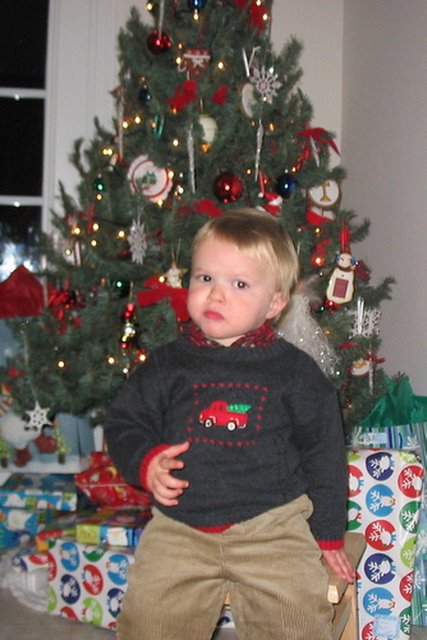
Christmas pictures will be coming soon, but since Micah's contagious for one more day (he's doing quite well on an antibiotic and never, as far as I can tell, realized that he was sick), I'm not going to have any little-hands-free computer time tomorrow, so the impatient will simply have to learn patience.
Christmas pictures will be coming soon, but since Micah's contagious for one more day (he's doing quite well on an antibiotic and never, as far as I can tell, realized that he was sick), I'm not going to have any little-hands-free computer time tomorrow, so the impatient will simply have to learn patience.
19 December 2006

Hoppin' Hegel, Batman!
I knew that next semester was going to be rough, but my professor for Hegelian and post-Hegelian literary theory just posted his reading list along with a Darth Vaderesque warning about the reading load. Yeesh!
I just ordered Eagleton's book for an early January brush-up (hopefully it'll show up while I'm out of town) and the Hegel tome to get cookin' over that. Fitzner told me this professor is a good one; I just hope my tail holds out.
All of a sudden translating two hundred lines of Beowulf a week started looking like the easy part of my semester...
I just ordered Eagleton's book for an early January brush-up (hopefully it'll show up while I'm out of town) and the Hegel tome to get cookin' over that. Fitzner told me this professor is a good one; I just hope my tail holds out.
All of a sudden translating two hundred lines of Beowulf a week started looking like the easy part of my semester...
18 December 2006
Weekly Standard's Damage Control
"Don't Cry for Pinochet"
His embrace of economic reform seems unlikely to have sprung from a commitment to freedom, given the overarching contempt for liberty that characterized the rest of his government. Rather, in order to insulate himself from the consequences of his murderous seizure of power, Pinochet sought out political allies, and his free market reforms helped him to garner support domestically on the right, and also among members of the international community. One must be careful not to fall into Pinochet's trap--accepting his brutal seizure of power and tyrannical rule as a natural accompaniment of free market reforms. Propagandists on the left lost no time in seeking to discredit economic freedom by associating it with Pinochet. To this day, we hear from Moscow that it takes a Pinochet to implement economic reforms successfully; Vladimir Putin seems all too willing to have Pinochet's uniform taken in a few sizes so he can try it on.Stalin does in fact discredit Leninism, and the Cultural Revolution does in fact discredit Maoism. Fascism was not corrupted by Hitler, and Milton Friedman's neoliberalism is not warped but embodied by Pinochet. Don't let any of the twentieth century ideologues try to bury their monsters in unmarked graves, especially not those who wound up on the winning sides of the world wars.
Back to the Classics
After a frenzy of post-Marxist theory and post-Freudian analysis--that is to say, after reading up on the last decade's scholarship for my end-of-semester papers--I've dug into Robert Fagles's translation of Homer's Iliad. To say that such a shift is a relief simply does no justice to the joy of reading old books without the nattering critics and their little academic careers. (I'm harboring no illusions--I'm certain that during my comps year I'll be sending off my own forgettable little articles to attempt to shore up my own little academic career.) I dusted off a reread of Virgil's Aeneid last Christmas, and if I have a few quiet hours this year, I'm probably going to consume another ancient epic.
Speaking of old books, my Plato course's evaluations came in today, and they were even better than the ones I got for last Spring's Hebrew Bible and/as Literature class. (Not sure if the latter link will work; I'll update it when I get access to the department page to post spring syllabi.) I could claim some sort of grand skill in teaching freshmen, but a year ago, I got some of the most wretched reviews I'd ever gotten. (That was my fourth year teaching college.) The change is not in my ability but in the texts at hand; college students know good books from mediocre ones, and when I started teaching Job and Republic instead of "Divinity and Pornography," they started reacting better to my classes. Now, as I gear up to teach Joseph in January and the Psalms in February, I know that I don't have to be a fabulous teacher to make this work, and I also know that if I do perform fabulously, I'll be leaping forth from the shoulders of great texts.
It makes one want to get back to school, no? :)
Speaking of old books, my Plato course's evaluations came in today, and they were even better than the ones I got for last Spring's Hebrew Bible and/as Literature class. (Not sure if the latter link will work; I'll update it when I get access to the department page to post spring syllabi.) I could claim some sort of grand skill in teaching freshmen, but a year ago, I got some of the most wretched reviews I'd ever gotten. (That was my fourth year teaching college.) The change is not in my ability but in the texts at hand; college students know good books from mediocre ones, and when I started teaching Job and Republic instead of "Divinity and Pornography," they started reacting better to my classes. Now, as I gear up to teach Joseph in January and the Psalms in February, I know that I don't have to be a fabulous teacher to make this work, and I also know that if I do perform fabulously, I'll be leaping forth from the shoulders of great texts.
It makes one want to get back to school, no? :)

14 December 2006
The Feminisation of Chile
The strong women of a generation ago were not the product of an evolving society, but created by events – and I don’t mean Allende’s experiment, in which women were mostly helpmeets. Mónica González, the country’s top investigative journalist, who was jailed for her human rights stories in the 1980s, credits the dictatorship for that brief awakening. ‘Since the people killed, imprisoned and disappeared were mostly men, women had to confront authority as never before. Facing up to the army and the police in search of husbands or sons, joining forces and speaking out politically, going to work for the first time.’In the wake of Pinochet's death, this article about the years since his regime lost power was pretty interesting. That feminism arose out of the ashes of neoliberalism is quite interesting; I don't spend a great deal of time thinking about gender issues (sorry to my feminist theorist and gender theorist colleagues), but this is one of those moments in which power and (bad) government and gender come together in ways that deserve some thought.
11 December 2006
Pinochet Dead
Mixed Reaction to Pinochet's Death
Another of the Cold War's monsters now faces divine judgment. May his years as dictator of Chile serve as a warning to empires--God knows with whom you ally.
School of the Americas Watch
Another of the Cold War's monsters now faces divine judgment. May his years as dictator of Chile serve as a warning to empires--God knows with whom you ally.
School of the Americas Watch
09 December 2006
Oh Dear
It seems that I've accidentally wiped out a fair bit of my blog's goodies while fiddling with BetaBlogger. I suppose I should treat this as an opportunity rather than a curse, so check back frequently for the new look of Hardly the Last Word!
We're doomed!
We're doomed!
Casting for Nativity Plays
I'm thanking the heavens as I type that I've never had to cast one of these legendary affairs, but the article is just too funny:
Come Christmas, there are always those cynics who dismiss infant nativity plays as pointless charades. What lessons, they ask, are to be learnt in the modern age from watching kids trying to work out what a "virgin's womb" is and how not to "abhor" it? The answer is many, for all concerned – not in the tale itself, but in the telling."Anyone can be a Shepherd, but there's only One Mary"
Hit Counter
I have to republish to get the hit counter to show up, so here goes...
(It's right below the "my library" bit.)
(It's right below the "my library" bit.)
05 December 2006









04 December 2006
Crapula
The sermon went well yesterday, and in the process of researching for it, I ran into one of the most fun vice-words I've ever seen, the Latin crapula.
My Latin class ends tomorrow (exempt from the final), and my students upload their portfolios tomorrow evening. Friday is the Old English exam, but that shouldn't be too much of a problem since I've got Thursday completely off. I've got a genuinely good head of steam on my Spenser paper, and if I play my cards right I might just get it turned in this weekend.
I know the last few entries have been grocery lists, most containing the same items, but my grad student readers know that such lists, and the gradual deterioration of such lists, keep us going in these closing days of the semester.
My Latin class ends tomorrow (exempt from the final), and my students upload their portfolios tomorrow evening. Friday is the Old English exam, but that shouldn't be too much of a problem since I've got Thursday completely off. I've got a genuinely good head of steam on my Spenser paper, and if I play my cards right I might just get it turned in this weekend.
I know the last few entries have been grocery lists, most containing the same items, but my grad student readers know that such lists, and the gradual deterioration of such lists, keep us going in these closing days of the semester.
28 November 2006
December 8, here I come
The last sprint is on. I've taught my last class (we're still meeting, but it's all peer revision from here on out), Spenser class has seen its last meeting, and only four Latin and four Old English classes remain. I can't remember a semester coming to a crashing halt as fast as this one is about to, but that's probably my bad memory more than anything else.
The Spenser paper is going to get done, though it's going to kill me getting there. The final exams will come and go, and once they're in the books, they're in the books. I still have about twenty-five papers and eighty portfolios to grade, but those also eventually get done.
I'm going to make it!
The Spenser paper is going to get done, though it's going to kill me getting there. The final exams will come and go, and once they're in the books, they're in the books. I still have about twenty-five papers and eighty portfolios to grade, but those also eventually get done.
I'm going to make it!
25 November 2006
Gearing up for Final Paper
For the first semester in a long time, I'm only going to be working on one paper during the home stretch, and I've already got that half-written. I'm going to try to force myself through a Marxist history of early-modern pre-capital and use it in my analysis (just to pacify the professor), but I'm mainly going to be focusing on the virtue of temperance in Platonic and Aristotelian molds, the permutations that happen in Calvin's Institutes, and how money fits into those ethical systems in into Guyon's encounter with Mammon in book 2 of Faerie Queene. Undoubtedly my take will be a hair "conservative" for folks with (what I call) faddish tastes, but I'm to the point now that "conservative" (still not sure what that means) just has to be the way I do things. I'm good at it.
Mary's father and uncle are coming in tonight and leaving tomorrow for Mississippi. That'll cut off my access to a fair chunk of the house, but one morning won't kill me or Micah. The house is pretty much ready for company, and I know Mary is looking forward to seeing people.
Mary's father and uncle are coming in tonight and leaving tomorrow for Mississippi. That'll cut off my access to a fair chunk of the house, but one morning won't kill me or Micah. The house is pretty much ready for company, and I know Mary is looking forward to seeing people.
21 November 2006
On Education and the End of the Semester
We wrapped up the discussion part of the semester yesterday with a conversation about John Milton's treatise "On Education." As I usually do when I teach that fun little text, I started by having the class list all of the things Milton would have Englishmen learn by the time they're 21 years old. One class came up with 46 things, the other 48. Take a look at the treatise, and you'll see that these are not simple things: Milton would have us all know trigonometry, agriculture, sword-fighting, Aramaic, metaphysics, medicine, and law among others.
But the overall aim of the piece is more ambitious yet:
We talked about the significantly less-ambitious aims of our own university as an introduction to the portfolio's reflective essay, in which each student will attempt to articulate what exactly happened since August 16.
Since the part of the semester in which I lecture is over, I've been doing some thinking about the course of things. First of all, if I do freshman comp next fall, I'm almost certainly doing Plato again; the text just begs to be taught to eighteen-year-olds. Second, I'm going to do some fiddling with WebCT and write a series of quizzes to keep the little boogers honest. Requiring discussion questions assumes that I'm going to take class time to check them (which I didn't); if I set up quizzes on WebCT, the honesty check should take care of itself. Finally, I'm going to ask the class whether the reading load was too heavy. If not, I might just teach Machiavelli's Il Principe alongside Plato's Republic as an introduction to all kinds of moral questions. But I'll ask my classes first; I wouldn't want to presume a greater importance for my class than what the class warrants.
But the overall aim of the piece is more ambitious yet:
The end then of learning is to repair the ruins of our first parents by regaining to know God aright, and out of that knowledge to love him, to imitate him, to be like him, as we may the nearest by possessing our souls of true virtue, which being united to the heavenly grace of faith makes up the highest perfection.That's right. Education, properly done, ought to come pretty darn close to reversing Original Sin.
We talked about the significantly less-ambitious aims of our own university as an introduction to the portfolio's reflective essay, in which each student will attempt to articulate what exactly happened since August 16.
Since the part of the semester in which I lecture is over, I've been doing some thinking about the course of things. First of all, if I do freshman comp next fall, I'm almost certainly doing Plato again; the text just begs to be taught to eighteen-year-olds. Second, I'm going to do some fiddling with WebCT and write a series of quizzes to keep the little boogers honest. Requiring discussion questions assumes that I'm going to take class time to check them (which I didn't); if I set up quizzes on WebCT, the honesty check should take care of itself. Finally, I'm going to ask the class whether the reading load was too heavy. If not, I might just teach Machiavelli's Il Principe alongside Plato's Republic as an introduction to all kinds of moral questions. But I'll ask my classes first; I wouldn't want to presume a greater importance for my class than what the class warrants.
15 November 2006
The end of Republic
It would be kind of cool if this blog post landed on some Star Wars fan's google search.
That aside, we actually finished up Monday with his bizarre section on reincarnation. I'm still not sure whether the story of Er is allegory or doctrine or some clever combination of the two, but I do think that Plato's joke at the very end is just silly.
In today's class we looked at the unapologetically empiricist first book of Aristotle's Nicomachean Ethics, and I think the class got a genuine grasp on that ancient difference between idealists and inductivists. After three months of Plato, Aristotle's moral conservatism is almost jarring, and I wonder which way my classes leaned.
The rest of the semester will have to do with constructing and revising the portfolio. That disappoints me somewhat, but I know that I should be focusing on my Spenser paper anyway, so I'll not cry too much.
Now I've got roughly three hours to work until I have to talk to the composition pedagogy class about special sections. I've got a basic working idea of what I'll talk about, and I've only got to fill up eight minutes, but it's still a hair nervewracking.
That aside, we actually finished up Monday with his bizarre section on reincarnation. I'm still not sure whether the story of Er is allegory or doctrine or some clever combination of the two, but I do think that Plato's joke at the very end is just silly.
In today's class we looked at the unapologetically empiricist first book of Aristotle's Nicomachean Ethics, and I think the class got a genuine grasp on that ancient difference between idealists and inductivists. After three months of Plato, Aristotle's moral conservatism is almost jarring, and I wonder which way my classes leaned.
The rest of the semester will have to do with constructing and revising the portfolio. That disappoints me somewhat, but I know that I should be focusing on my Spenser paper anyway, so I'll not cry too much.
Now I've got roughly three hours to work until I have to talk to the composition pedagogy class about special sections. I've got a basic working idea of what I'll talk about, and I've only got to fill up eight minutes, but it's still a hair nervewracking.
11 November 2006








09 November 2006

Better Ways
We finished what I would call the ethical part of Republic in class yesterday, and I'm pleased with the bulk of the semester's discussions. Even if some (or most) of the folks in my classes never pick up a copy of Plato again (I hope they do), they've been exposed to and had to think about questions of goodness, justice, human community, idealism, and half a dozen other things.
And now that we've covered what we covered yesterday, they all know that morality is not only better than immorality but 729 times better than immorality! (Republic section 587e) The next time my freshmen are tempted to immorality, and their WWJD bracelets are out of morality-batteries (moratteries?), they can remember what Plato told them, and they'll say, "Why would I want to do that? To do the good thing would be 729 times better!"
Perhaps not.
Plato finished up this section with quite a vivid metaphor: the one who is satisfied with apetite-pleasing pleasure is as one who climbs halfway up a mountain and congratulates himself on reaching the top, only to return to the bottom, then go up halfway, and so on. The one whose pleasures are philosophic reach the height of the mountain. We had some good times discussing why Plato thinks philosophy is better than sex, but I think that everyone present could appreciate this image.
This Friday we're discussing Plato's famous attack on poetry, and Monday, in addition to the semester's customer satisfaction surveys, we're talking about Plato's funky reincarnation chapter. Both ought to be fun.
In other realms, I finished up Chesterton's Orthodoxy during my office hours today. I hate to alienate any readers who love the Inklings and their ilk, but I wasn't all that impressed. The book itself just did not live up to the glowing recommendations that came before. In one chapter, I found myself thinking, paragraph by paragraph, "Okay. He's a Humean empiricist. He's surprised every time the door opens to the same street outside, and he thinks it's foolish to assume that the same door will do the same thing tomorrow. He can get on to the next chapter." In another, I thought, "Okay, he's a moral relativist. He thinks that Enlightenment wars are awful but that Christian wars are great. Next chapter, please." None of the chapters left me speechless in the ways that Augustine or Dante or even Barth leaves me speechless; I just wanted to get past his logical-fallacy-for-this-chapter and finish. But I suppose now I can say that I've read Chesterton and found him wanting rather than admitting that I've never read Chesterton. That's a little bit better.
And now that we've covered what we covered yesterday, they all know that morality is not only better than immorality but 729 times better than immorality! (Republic section 587e) The next time my freshmen are tempted to immorality, and their WWJD bracelets are out of morality-batteries (moratteries?), they can remember what Plato told them, and they'll say, "Why would I want to do that? To do the good thing would be 729 times better!"
Perhaps not.
Plato finished up this section with quite a vivid metaphor: the one who is satisfied with apetite-pleasing pleasure is as one who climbs halfway up a mountain and congratulates himself on reaching the top, only to return to the bottom, then go up halfway, and so on. The one whose pleasures are philosophic reach the height of the mountain. We had some good times discussing why Plato thinks philosophy is better than sex, but I think that everyone present could appreciate this image.
This Friday we're discussing Plato's famous attack on poetry, and Monday, in addition to the semester's customer satisfaction surveys, we're talking about Plato's funky reincarnation chapter. Both ought to be fun.
In other realms, I finished up Chesterton's Orthodoxy during my office hours today. I hate to alienate any readers who love the Inklings and their ilk, but I wasn't all that impressed. The book itself just did not live up to the glowing recommendations that came before. In one chapter, I found myself thinking, paragraph by paragraph, "Okay. He's a Humean empiricist. He's surprised every time the door opens to the same street outside, and he thinks it's foolish to assume that the same door will do the same thing tomorrow. He can get on to the next chapter." In another, I thought, "Okay, he's a moral relativist. He thinks that Enlightenment wars are awful but that Christian wars are great. Next chapter, please." None of the chapters left me speechless in the ways that Augustine or Dante or even Barth leaves me speechless; I just wanted to get past his logical-fallacy-for-this-chapter and finish. But I suppose now I can say that I've read Chesterton and found him wanting rather than admitting that I've never read Chesterton. That's a little bit better.
Subscribe to:
Posts (Atom)


